
puting out wildfires at our nyave plantation - August, 2019.
nearly 400 acres of 4 years old pinus patula was completely burnt in under three hours!.
Protecting existing forests, restoring degraded ones, establishing new ones and competently managing them is crucial for humanity to manage the grave impacts of climate change.
In Tanzania wildfires are reported to be increasing at an alarming rate. The problem of wildfires in Tanzania is complex and should not be addressed on a sectoral level as it concerns all the aspects related to forest and land management, prevention, suppression, and post‐fire management. It is a problem of general policy, land policy and forest policy and legislation, as much as it is a problem of equipment and capacity building within any one sector. In Tanzania, an average of 11 million hectares burn annually, (FAO‐Finland Forestry Programme – TANZANIA, 2013). That is nearly 12% of Tanzania's land area.
Tree planting is a very straightforward Carbon Sequestration method known to mankind. More important, it is a nature-based method of combating climate change - which everyone of us can participate.
Therefore, clear wildfire mitigation strategies is critical in order to bring about the climate change impact we seek.
AFRICA - The fire continentEven though research shows that the total number of square kilometers burned globally each year has dropped roughly 25 percent since 2003 -- largely been due to population growth and development in grasslands and savannas, as well as to an increase in the use of machines to clear farmland.
In Africa, the same is not true according to NASA’s new video. It does show regional wildfire upticks in certain parts of the world. NASA noted, “ Africa is truly the fire continent.” On an average day in August, satellites typically detect 10,000 actively burning fires around the world — 70 percent of which are in Africa.
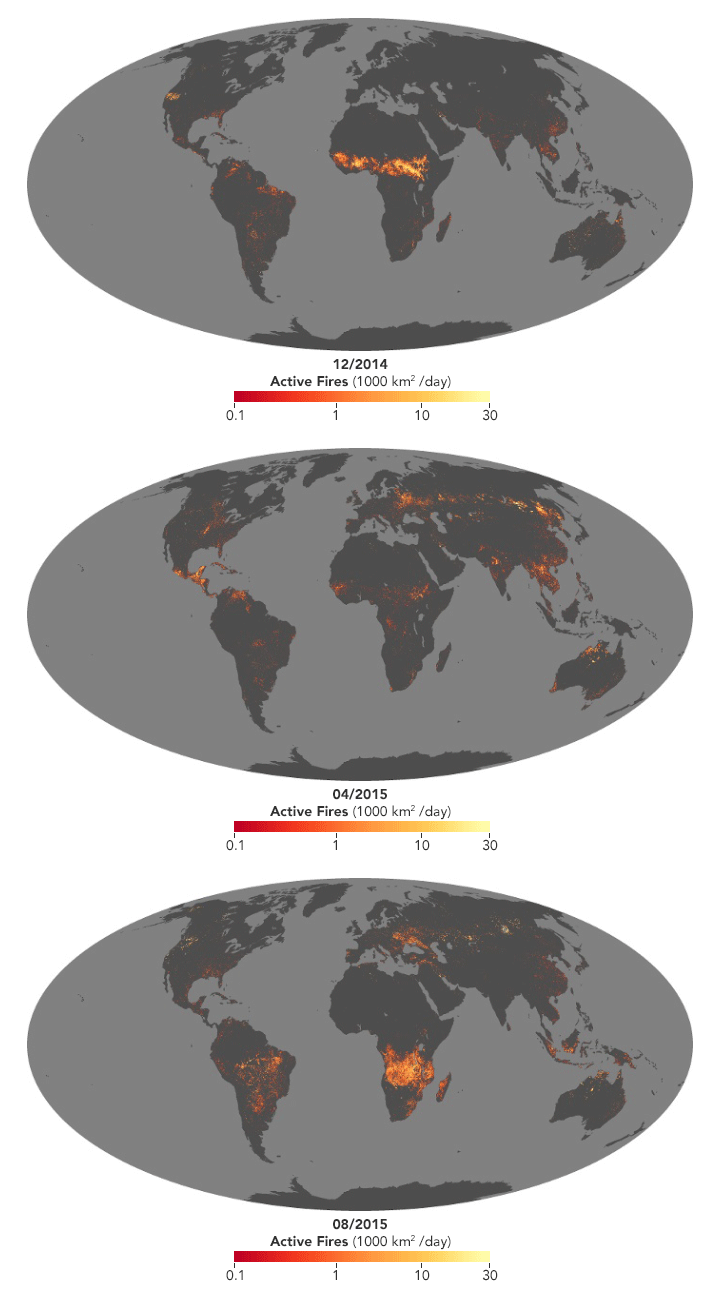
December 1, 2014 - August 31, 2015
Source: NASA
There are really two separate trends,” said James Randerson, a scientist at the University of California, Irvine who worked on the new wildfire video.
“Even as the global burned area number has declined because of what is happening in savannas, we are seeing a significant increase in the intensity and reach of fires in the western United States because of climate change.”
According to researches, well stocked trees in forests , typically sequester carbon at a maximum rate between about age 10 and age 20–30. After this age, if the trees are not harvested, the sequestration rate slows gradually until maturity at about 80 to 100+ years of age, and flattens out.
That is to say, any tree endavour needs to go hand in hand with strategies for wildfire protection for the project to achieve the maximum benefits trees can offer.
Read more about wildfires
'Everything is worse than we thought': Amazon documentary details the dangers of lack of action on climate change
Building a Long-Term Record of Fire
The Fire Continent
Trees for carbon sequestration
more about wildfires
California is on fire
Wildfire call response
Fire Proof Trees
Can Cypress Trees Help Suppress Wildfires?
The curious case of Valencia’s flameproof cypresses
Wildfire - protecting trees is a serious business
Climate Change vs. Forests: The Carbon Storage Showdown
As the world boils, a backlash to climate action gains strength